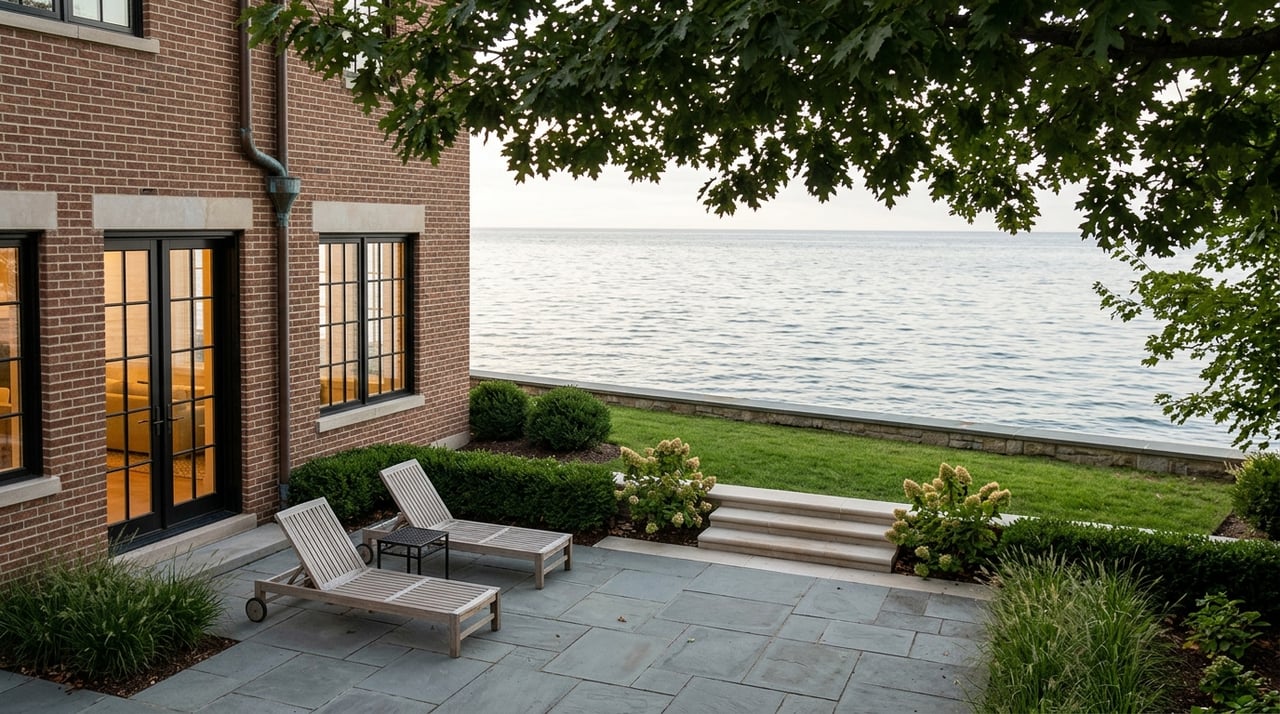
What to Know About Grosse Pointe Farms Waterfront Homes
July 16, 2026
July 16, 2026
If you are shopping for a lakefront lifestyle in Grosse Pointe Farms, one of the biggest mistakes you can make is assuming every “water” home offers the same experience. A house with direct Lake St. Clair frontage lives very differently from a home with a framed water view or one that simply offers quick access to the shore. Knowing the difference can save you time, protect your budget, and help you choose a home that truly fits how you want to live. Let’s dive in.
When buyers talk about waterfront homes in Grosse Pointe Farms, they are often grouping together three very different property categories. In practice, those categories are true waterfront, water-view, and walk-to-water homes. Each one comes with its own benefits, limitations, and questions to ask before you make an offer.
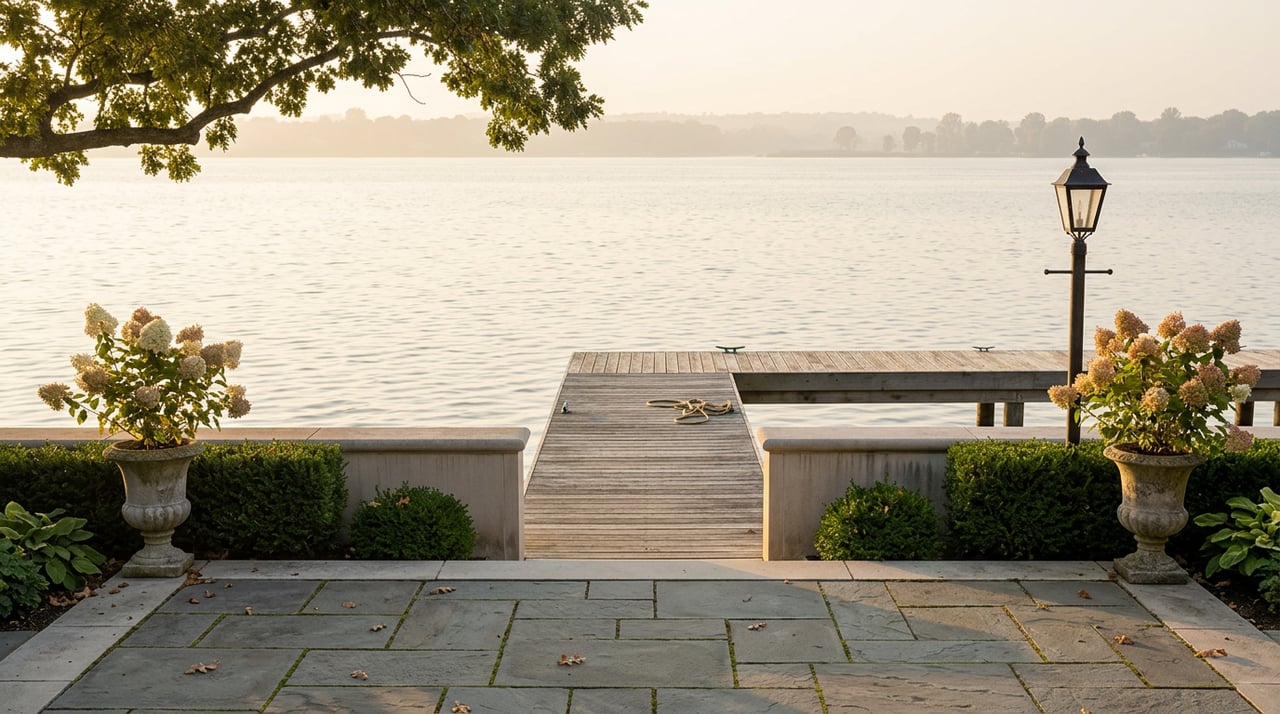
A true waterfront home usually has direct frontage on Lake St. Clair or harbor water. That means your decision is not just about architecture, views, and lifestyle. It also includes shoreline ownership, seawall condition, dock or lift considerations, and any permitting tied to work near the water.
For many buyers, this is the most immersive lake lifestyle. You may get immediate access to boating or shoreline use, but you also take on more responsibility for exposure to wind, ice, wave action, and long-term maintenance.
A water-view home is more about sightlines than shoreline ownership. You may enjoy sunrise light, open horizon, or seasonal lake views without having direct frontage or the same day-to-day obligations tied to the shore.
In Grosse Pointe Farms, views can vary more than buyers expect. The shoreline changes near the city’s point, and mature trees, neighboring rooflines, and lot placement can all affect what you actually see from inside the home or from outdoor living areas.
Walk-to-water homes appeal to buyers who want the feel of lake living without private shoreline maintenance. In Grosse Pointe Farms, that often means being close to community waterfront amenities like Pier Park and Pier Park Harbor.
This option can be a strong fit if you care more about proximity and routine access than private frontage. Still, it is important to confirm how those amenities function in real life, since access and use are governed by resident park passes and harbor rules.
Grosse Pointe Farms is a small Lake St. Clair community in Wayne County with a shoreline identity that strongly shapes buyer interest. Wayne County describes the city as a suburban community on the shores of Lake St. Clair, with Pier Park and Pier Park Harbor as major waterfront amenities. The Census Bureau estimate cited by Wayne County places the population at 9,735 as of July 1, 2025.
The housing experience here is also shaped by the city’s planning priorities. Local planning materials emphasize preserving architectural character and the built character of existing neighborhoods, so you are more likely to see a mix of older, well-kept homes and custom properties than a uniform new-build setting.
That matters in a waterfront or view-home search because the lot can be just as important as the house. Setbacks, landscaping, neighboring structures, and the angle of the shoreline may all influence privacy, sightlines, and how the home feels across the seasons.
Waterfront homes often create an emotional reaction right away. The setting can be stunning, and direct access to the lake or harbor may check every box on your wish list. But the best decision usually comes from balancing that excitement with a clear look at upkeep.
City documents note that the nearly three-mile seawall corridor along Lake Shore Road in Grosse Pointe Farms and Grosse Pointe Shores had deteriorated enough that replacement planning was estimated at $23.8 million after historic 2019 lake levels worsened conditions. That does not mean every property has the same issue, but it does show why shoreline structures deserve close attention.
A water-view or walk-to-water home may offer a very different ownership experience. You can still enjoy the visual and lifestyle benefits of the lake while potentially reducing direct shoreline obligations.
When you tour a waterfront or lake-adjacent home, it helps to move beyond finishes and staging. You want to understand not only what looks good today, but also what the property includes and what it may require over time.
Here are some of the most useful questions to ask:
These questions help you compare homes more accurately. They also make it easier to separate a beautiful listing from a practical fit.
If a home has shoreline improvements, permit history matters. Michigan EGLE requires permits for many construction activities on Great Lakes bottomlands below the ordinary high-water mark, including filling, dredging, and placement of docks, boat lifts, and seawalls.
For projects on the Great Lakes that require EGLE approval, a U.S. Army Corps of Engineers permit is also required. As a buyer, you should ask for records of past work, repair history, and the name of the contractor or engineer involved.
This is one of the most important differences between buying a conventional home and buying direct waterfront. The shoreline is not just a backdrop. It is a physical and legal part of the property story.
Even if a home is not directly on the water, drainage deserves careful review in Grosse Pointe Farms. The city’s 2023 planning report says the community has dealt with chronic basement, street, and surface flooding and is investing in an Inland District Sewer Separation Project to reduce those problems.
During showings and inspections, pay close attention to grading, gutters, sump systems, backup protection, and any history of water entry. These details may not photograph well in a listing, but they can have a major effect on your ownership experience.
A smart home search looks beyond curb appeal. It includes the systems that protect the house when weather and water conditions change.
Buyers sometimes assume that if a home is near the lake, it must be in a flood hazard area, or that if it is one street back, it is not. In reality, flood mapping should be checked by exact parcel, not general impression.
FEMA identifies its Flood Map Service Center as the official public source for flood hazard information. For lake-adjacent properties, even small elevation differences can matter, so address-level review is the best approach.
If boating is part of your vision, make sure you understand the access rules before you fall in love with a property. In Grosse Pointe Farms, Pier Park harbor materials show the use of resident park passes, mooring agreements, guest wells, and a seasonal boat-lift process.
The harbor rules also state that watercraft must be removed by November 1 each year. Those details may shape how convenient the setup feels for your routine, your guests, and your seasonal planning.
A home can be close to the water and still function very differently depending on how you plan to use it. That is why lifestyle fit matters just as much as location.
The best waterfront decision is not always the one with the most dramatic listing photos. It is the one that aligns with your daily habits, maintenance comfort level, and long-term goals.
If you want direct boating and private shoreline access, true waterfront may be worth the added complexity. If you want the beauty of the lake with fewer shoreline responsibilities, a water-view home may be the better match. And if you want convenient access to waterfront amenities without private frontage, a walk-to-water property can make a lot of sense.
In a market as nuanced as Grosse Pointe Farms, local guidance matters. If you want help comparing waterfront, view, or walk-to-water opportunities in a way that fits your lifestyle and priorities, connect with Closing and Toasting with Megan Prieur.

Buying a home will likely be one of the most expensive purchases of your life and selling your home can be an incredibly emotional experience. When you're making a tough life decision like this, it's imperative that you're working with someone you can depend on, who will be available at a moments notice, and who puts you first.